
Lesson 1 — External Physical Relaxation
Physical foundations of the Self-Liberation system.
Guided Practice Audio
In this lesson we will study the ways to relax our bodies. But before beginning this basic practice, you need to learn to recognize the most tense areas of your body.
Which areas of your body are tense right now? Pay careful attention to your body and discover those tense areas. Perhaps the back of your neck or your shoulders are tense? Or perhaps the muscles in your chest or your stomach?
To relax these points of permanent tension, you must first begin to observe them. Observe your chest, your stomach, the back of your neck and your shoulders, and your face.
Pro Tip
Then, wherever you find the most tension, strongly increase this tension. Hold this tension for a few seconds until the muscles become tired. Then, abruptly release the excess tension. Repeat this process three times.
You have learned how to relax your most tense muscles by doing something opposite to what you might expect; you have tensed your muscles even more in order to relax them.
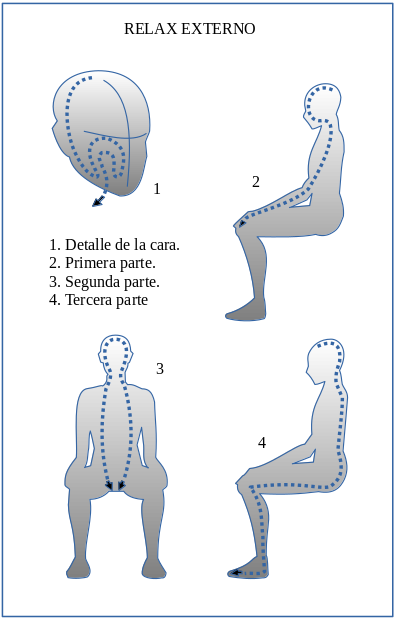
Figure 1 – External Physical Relaxation (original illustration from Self-Liberation).
Once you master this technique, proceed to mentally feel the external muscles of your body in a symmetrical way. That is, always feel both sides of your body, for example, both eyes, both shoulders, both hands, etc. at the same time.
Sequence of Attention:
- ✦ The Head: Scalp, facial muscles, and jaw.
- ✦ The Face: Both eyes, sides of the nose, corners of the lips.
- ✦ The Arms: Down the neck to shoulders, arms, forearms, and hands.
- ✦ The Front: Neck, chest, stomach, to the bottom of the trunk.
- ✦ The Back: Spine, shoulder blades, lower back, and down to the toes.
When you finish and have a command of this exercise, you should experience a good external muscular relax.
Chat is available for guidance on this lesson's exercises.